

EURACAN Summer School 2026 — That’s a wrap!
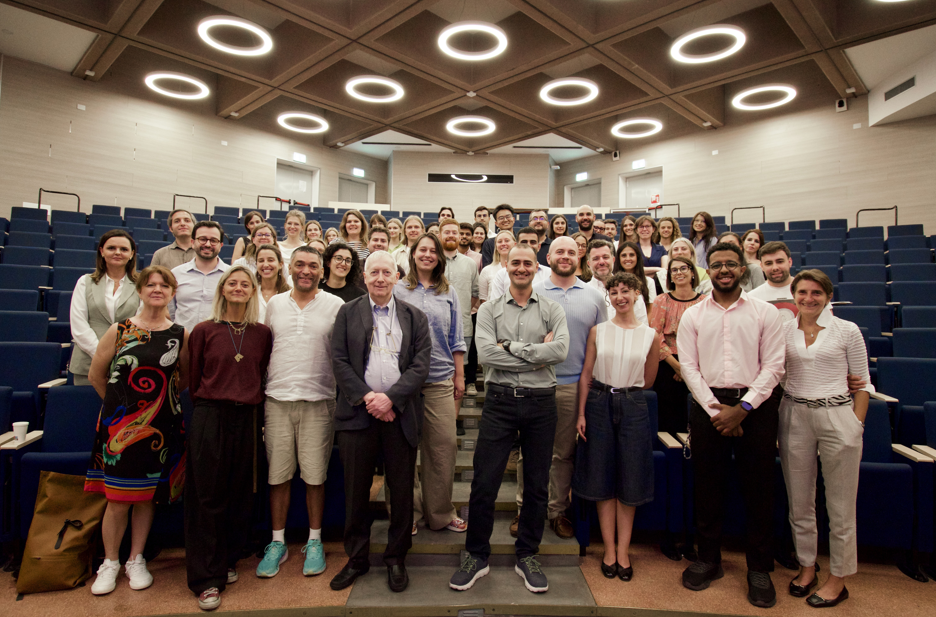
From the very first discussions on what makes a cancer rare and the challenges of clinical and epidemiological research, one theme ran throughout the Summer School: uncertainty — and how we can manage it when generating evidence for rare cancers.
Together, we explored:
🔹 Clinical decision-making and uncertainty
🔹 Frequentist and Bayesian approaches
🔹 Evidence hierarchies and health economic evaluation
🔹 Ethics and regulatory pathways in rare cancers
🔹 Clinical trial designs for small populations
🔹 Surrogate endpoints and observational research
🔹 Registries, data reuse, synthetic data and data curation
🔹 Patient-reported outcomes
🔹 And, looking ahead, the rapidly evolving role of artificial intelligence, from pattern discovery and prediction to large language models and causal reasoning.
What made these four days particularly valuable was the opportunity to bring together experts and early-career researchers from different disciplines and countries, fostering critical discussion around a shared challenge: how to generate robust, meaningful evidence when patient populations are small and uncertainty is unavoidable.A sincere thank you to all our faculty, speakers, participants, and organisers for their expertise, openness, and engagement — and for making this Summer School a space for challenging questions, thoughtful debate, and new connections.We leave Milan with new perspectives, new collaborations, and renewed commitment to advancing research for patients with rare cancers.